Real Bean vs. The Lab: The High Cost of "Cheap" Vanilla
Real Bean vs. The Lab: The High Cost of "Cheap" Vanilla
Walk down the baking aisle or look behind the counter of a fast-food coffee chain, and you’ll see it: a sea of crystal-clear "Vanilla" syrups. But have you ever stopped to ask why a product derived from a dark, oily, sun-cured bean is as clear as tap water?
The truth is, most of the "vanilla" consumed in the world has never seen a vine. It was born in a beaker. Here is the breakdown of the "Lab vs. The Bean," and why your palate (and your health) can tell the difference.
1. The Chemistry of "Fake" (Synthetic Vanillin)
Real vanilla is one of the most chemically complex flavors on Earth, containing over 250 distinct flavor compounds. Synthetic vanillin—the stuff in the clear bottles—contains exactly one.
Most mass-produced vanillin is synthesized from Guaiacol (a precursor derived from crude oil) or Lignin (a byproduct of the paper-milling industry). While it’s chemically identical to the primary scent molecule of vanilla, it’s a "hollow" flavor. It’s loud and sweet, but it has no depth, no floral notes, and no aftertaste other than sugar.
2. The Extraction vs. The Infusion
Even "Artisan" brands often take a shortcut by using Vanilla Extract.
The Lab Method: Beans are soaked in a high-proof alcohol bath to strip the flavor quickly. This results in a thin liquid where the alcohol often overpowers the delicate notes of the bean.
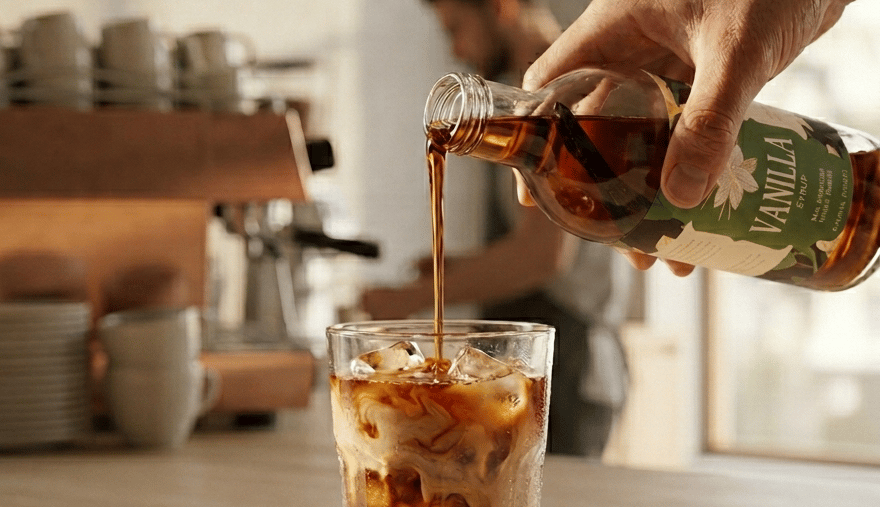
The Goldvine Method (The Infusion): We don't just "soak" the beans; we hand-scrape the caviar. By introducing the raw, oily seeds directly into our 2:1 cane sugar base, the oils emulsify into the syrup. This is why Goldvine is opaque and rich, while the "Lab" version is thin and transparent.
3. The "Natural Flavor" Loophole
The biggest deception in the food industry is the label "Natural Flavors." Under FDA guidelines, a "natural flavor" only has to originate from a natural source—it doesn't have to be the actual ingredient. Lab-synthesized vanillin derived from wood pulp can legally be called "Natural."
When you see the visible bean specks in a bottle of Goldvine, you aren't looking at "flavoring." You’re looking at the fruit of an orchid that took three years to grow and months to cure.
Why the "Specks" Matter
In the specialty coffee world, "The Specks" are the ultimate badge of honor. Those tiny seeds (the caviar) contain the highest concentration of vanilla essential oils. When you pump Goldvine into your latte, those specks act as "flavor bombs" that burst when they hit the hot milk, releasing a secondary wave of aroma that synthetic syrups simply can't replicate.
Stop drinking "wood pulp" in your morning brew. Taste the Real Madagascar Difference.